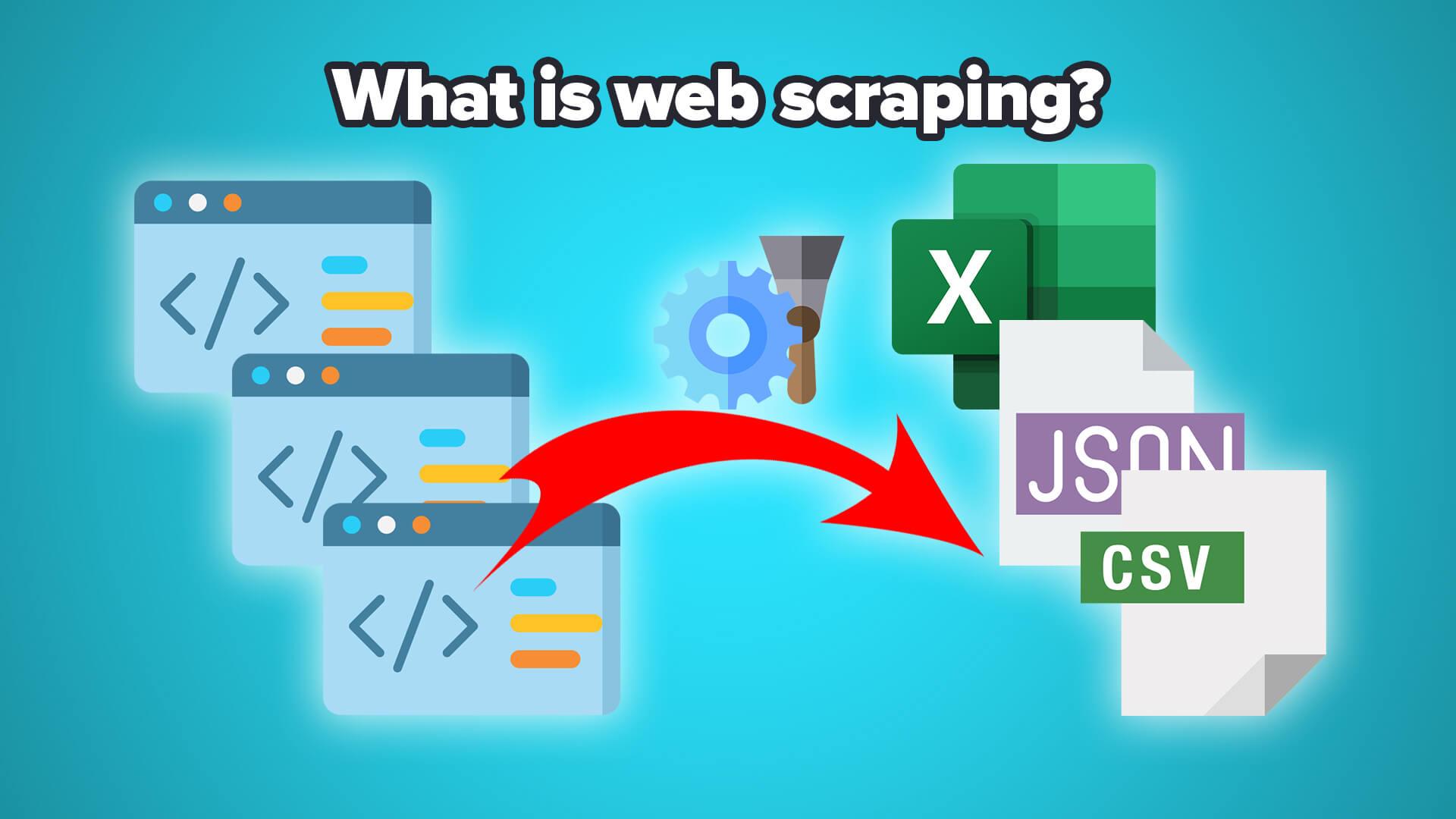
Web scraping is a powerful technique for extracting data from websites, but the approach differs depending on whether you're targeting a Server-Side Rendered (SSR) website or a client-side rendered website, like one built with React. This article explores how to scrape both types using Node.js, highlighting the differences, challenges, and advanced techniques to bypass anti-bot protections.
SSR websites generate HTML on the server and send a fully rendered page to the client. This makes scraping relatively straightforward because the data is embedded in the initial HTML response.
To scrape an SSR website, you can use libraries like axios or node-fetch to make HTTP requests and a parser like cheerio to extract data from the HTML.
While SSR websites are easier to scrape, you might encounter a 403 Forbidden error when making direct requests. This often happens because the server detects your request as coming from a bot. To bypass this, you need to make your request mimic a browser by setting appropriate headers, such as:
- User-Agent: Mimics a browser like Chrome or Firefox.
- Accept: Specifies the type of content (e.g., text/html).
- Referer: Simulates a request from a legitimate source.
To avoid 403 errors, configure axios with headers that resemble a browser request:
By setting these headers, your request is more likely to be treated as a legitimate browser request, reducing the chances of a 403 error. if this still not work, consider using Puppeteer similar to how we use it for CSR website below.
CSR websites, which rely on client-side rendering, present a different challenge. The initial HTML response is often minimal, containing mostly JavaScript that renders the content in the browser. To scrape such websites, you need to execute the JavaScript to obtain the fully rendered HTML.
For React websites, tools like axios alone are insufficient because they only retrieve the raw HTML without executing JavaScript. This is where Puppeteer, a headless browser automation tool, comes in. Puppeteer launches a browser instance, renders the page (including JavaScript), and allows you to extract the final HTML.
- Headless Mode: Runs the browser without a visible UI, making it suitable for scraping.
- Network Idle: The waitUntil: 'networkidle2' option ensures the page is fully loaded before scraping.
- Performance: Puppeteer is resource-intensive compared to axios, so use it only when necessary (e.g., for client-side rendered websites).
| Aspect | SSR Website | React Website |
|---|---|---|
| Rendering | HTML rendered on the server | HTML rendered in the browser via JS |
| Tool Required | axios + cheerio | puppeteer |
| Complexity | Simpler, direct HTTP request | Complex, requires JS execution |
| Common Issues | 403 errors (fix with headers) | Missing content without JS rendering |
| Performance | Faster, lightweight | Slower, resource-intensive |
Many websites employ anti-bot protections like Cloudflare, Akamai, or other DNS-based security systems to block scrapers. These systems use techniques like rate limiting, JavaScript challenges, and browser fingerprinting to detect bots. Below are advanced strategies to bypass such protections.
Anti-bot systems often flag requests with static or suspicious User-Agents. Use a library like fake-useragent to rotate User-Agents dynamically.
Cloudflare and similar systems may block requests from a single IP address if they detect excessive activity. Rotating proxies can help distribute requests across multiple IPs, reducing the likelihood of rate limiting or IP bans.
Note: Use reputable proxy providers (e.g., Bright Data, Oxylabs) and consider residential proxies, as they are less likely to be flagged than datacenter proxies.
Cloudflare often serves a JavaScript challenge page that requires browser-like behavior to pass. Puppeteer can handle these challenges automatically by rendering the page and executing the JavaScript.
- Enable JavaScript in Puppeteer: Ensure page.setJavaScriptEnabled(true) (default).
- Wait for Navigation: Use page.goto(url, { waitUntil: 'networkidle0' }) to wait for all network activity, including challenge resolution.
- Solve CAPTCHAs: If a CAPTCHA appears, consider services like 2Captcha or Anti-Captcha to automate solving, though this adds cost and complexity.
To avoid triggering rate limits, implement delays between requests and mimic human-like behavior.
Advanced anti-bot systems analyze browser fingerprints (e.g., screen resolution, WebGL, canvas rendering). To evade detection:
- Randomize Viewport: Set random viewport sizes in Puppeteer.
- Disable WebGL: Use Puppeteer’s --disable-webgl flag if not needed.
- Stealth Plugins: Use puppeteer-extra-plugin-stealth to make Puppeteer less detectable.
Cloudflare’s protections are particularly robust. In addition to the above, consider:
- TLS Fingerprinting: Use libraries like axios with custom TLS settings or Puppeteer to match Chrome’s TLS fingerprint.
- Undetected-Chromedriver: For Node.js, libraries like undetected-chromedriver (a Puppeteer alternative) can help bypass Cloudflare by mimicking a real Chrome browser more closely.
- Respect Robots.txt: Check the website’s robots.txt file to ensure scraping is allowed.
- Rate Limiting: Avoid overwhelming the server by adding delays between requests.
- Error Handling: Implement robust error handling for network issues or blocked requests.
- Dynamic Headers: Rotate User-Agents or use libraries like fake-useragent to avoid detection.
- Legal Considerations: Ensure compliance with the website’s terms of service and applicable laws.
- Monitor Responses: Regularly check for anti-bot triggers (e.g., CAPTCHA pages) and adjust strategies accordingly.
Scraping SSR websites is generally simpler, requiring only HTTP requests and proper headers to bypass restrictions like 403 errors. React websites, however, demand tools like Puppeteer to render JavaScript and access the full content. Advanced anti-bot protections, such as those from Cloudflare, require sophisticated techniques like proxy rotation, stealth plugins, and JavaScript challenge handling. By combining these strategies with ethical scraping practices, you can effectively scrape both SSR and React websites while minimizing detection and rate-limiting issues.